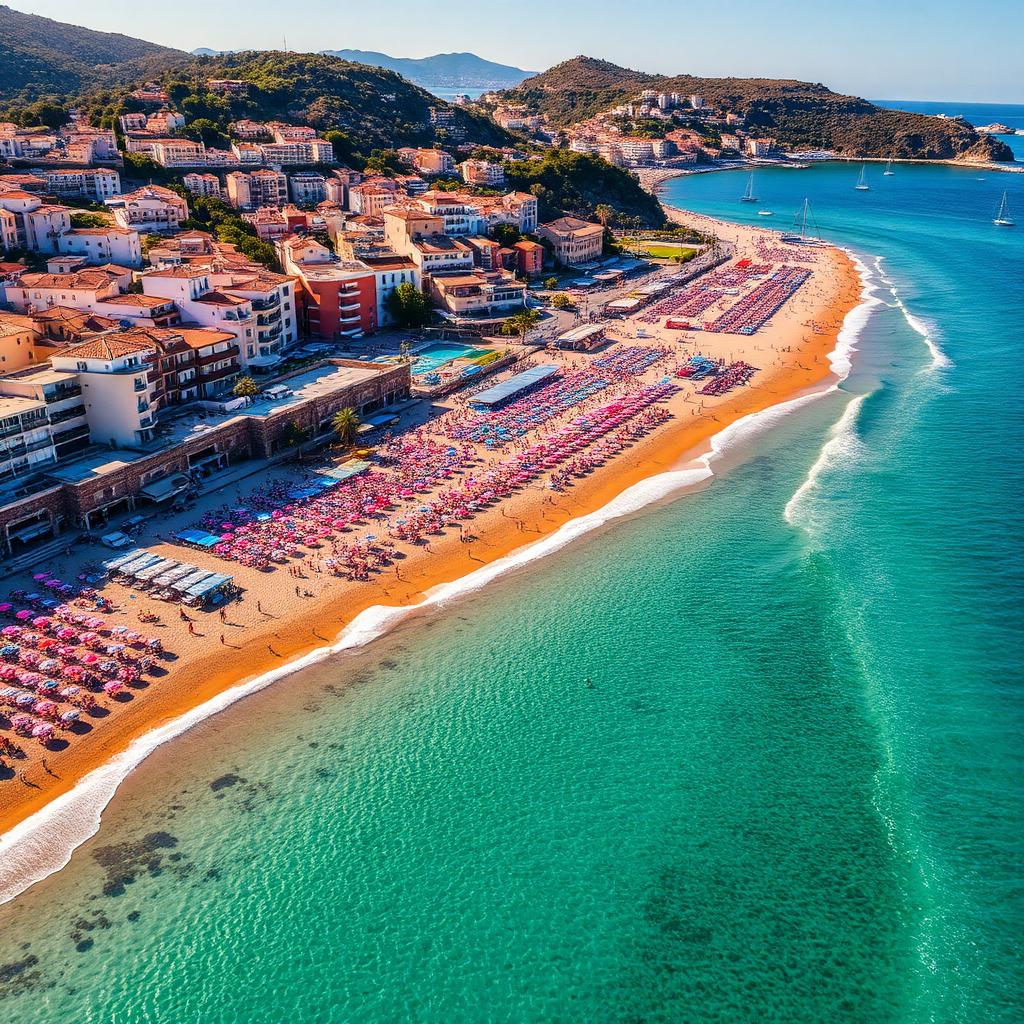
Spain is once again breaking its all-time tourism record in summer 2026. We look at why finding a flat or hotel has become so hard, how holiday-rental prices have moved since 2020 on the coast, islands and inland, and what only Spain offers to travellers.
Summer after summer, Spain shatters its own records. July and August 2026 are set to break new highs of international arrivals, while finding a holiday rental or a reasonably priced hotel room has become almost mission impossible. We look at the numbers, how prices have evolved in the three Spains — coast, islands and inland — and why the country remains irreplaceable for millions of travellers.
Another absolute record summer
Spain closed 2025 with more than 94 million international tourists, breaking for the second year in a row the world record it already set in 2024. FRONTUR and Turespaña data suggest that summer 2026 will beat that mark again, with year-end estimates of 98–100 million visitors.
- July 2025: 11.2 million international tourists (+4.8% YoY)
- August 2025: 10.9 million (+3.7%)
- Tourist spending: over €22 billion in the summer quarter alone
- Average stay: 7.4 nights, a decade high
The main source markets are still the UK, France, Germany, the Netherlands and Italy, but the strongest growth in recent years comes from the United States (+18% since 2023) and Nordic countries booking longer, non-winter stays.
The housing crisis is drying up summer supply
The bitter side of the tourism boom is housing pressure. Rising purchase prices, low new construction, tighter tourist-rental licences and record demand mean that this summer finding a holiday flat or a front-line hotel is pricier and harder than ever.
- Balearic Islands, Canary Islands and Costa del Sol have frozen or restricted new tourist-rental licences
- Barcelona will revoke all VUT licences by 2028, already shrinking supply in summer 2026
- Hotel occupancy above 90% along the coast in July and August
- Advance booking: 62% of travellers book more than 3 months ahead (vs 38% in 2019)
Holiday-rental price evolution 2020-2026
Using data from Idealista, Fotocasa and Exceltur, this is how average nightly prices for a standard 2-bedroom holiday flat in peak season have moved:
🏖️ Mediterranean and Atlantic coast
- Costa Brava (Girona): €110/night in 2020 → €195/night in 2026 (+77%)
- Costa Blanca (Alicante): €85 → €165 (+94%)
- Costa del Sol (Málaga): €120 → €240 (+100%)
- Costa de la Luz (Cádiz-Huelva): €95 → €180 (+89%)
- Rías Baixas (Galicia): €80 → €150 (+87%)
🏝️ Islands
- Mallorca: €140 → €295 (+110%)
- Ibiza: €210 → €485 (+131%) — the biggest jump in Spain
- Menorca: €130 → €260 (+100%)
- South Tenerife: €100 → €195 (+95%)
- South Gran Canaria: €95 → €180 (+89%)
🏔️ Inland
- Sierra de Gredos (Ávila): €70 → €115 (+64%)
- Aragonese and Catalan Pyrenees: €90 → €160 (+78%)
- Alpujarra (Granada): €65 → €110 (+69%)
- Ribera del Duero and La Rioja: €85 → €145 (+71%)
- Rural Extremadura: €55 → €90 (+64%)
Coast vs. islands vs. inland
- Balearic Islands lead with an average +114%, pulled by Ibiza and Mallorca
- Peninsular Mediterranean coast: +89%, with Málaga on top
- Canary Islands: +92%, cushioned by year-round demand
- Rural inland: +70%, lower ceiling but steady climb
Rural stays in Asturias, Cantabria, Galicia and the Pyrenees are up 34%, and shared second homes among families are booming as a response to prices.
What only Spain offers
- Affordable sun-and-beach with EU standards: over 8,000 km of coastline, 615 Blue Flag beaches, EU-grade healthcare and safety. Greece, Croatia or Turkey compete on climate but not on all three.
- Everyday accessible gastronomy: €12-18 "menú del día", tapas culture and 15 clearly distinct regional cuisines.
- Cultural density:50 UNESCO World Heritage sites, second only to Italy, within short driving distance.
- Street life and Mediterranean schedule: terraces, festivals and safe nightlife with no real European equivalent.
- Landscape diversity in hours: beach, high mountains, desert (Almería), volcanoes (Canaries) and Atlantic forests within a day.
- Connectivity and language: 50+ airports, one of the world's longest high-speed rail networks, and a language spoken by 500 million people.
- Predictable climate:300+ sunny days a year across much of the country.
What this means for non-resident owners
If you own Spanish property from abroad, the tax implications are clear:
- Summer Airbnb/Booking income must be declared annual on Modelo 210
- 19% for EU/EEA residents (deductions allowed), 24% for the rest (no deductions)
- Empty or owner-used property still triggers annual imputed income
- Councils increasingly cross-check with AEAT: not declaring holiday rentals is riskier every year
At SpainTaxForm we handle Modelo 210 for non-resident owners — quarterly rental filings and annual imputed income — 100% online with fixed prices.
Related guides
Sources
- 1INE — Estadística de Movimientos Turísticos en Frontera (FRONTUR)
- 2INE — Encuesta de Ocupación Hotelera y Apartamentos Turísticos
- 3Exceltur — Barómetro de la Rentabilidad y el Empleo Turísticos
- 4Idealista — Informes de precios de alquiler vacacional 2020-2026
- 5Ministerio de Industria y Turismo — Turespaña
Comments(0)
Sign in to leave a comment
Be the first to comment.