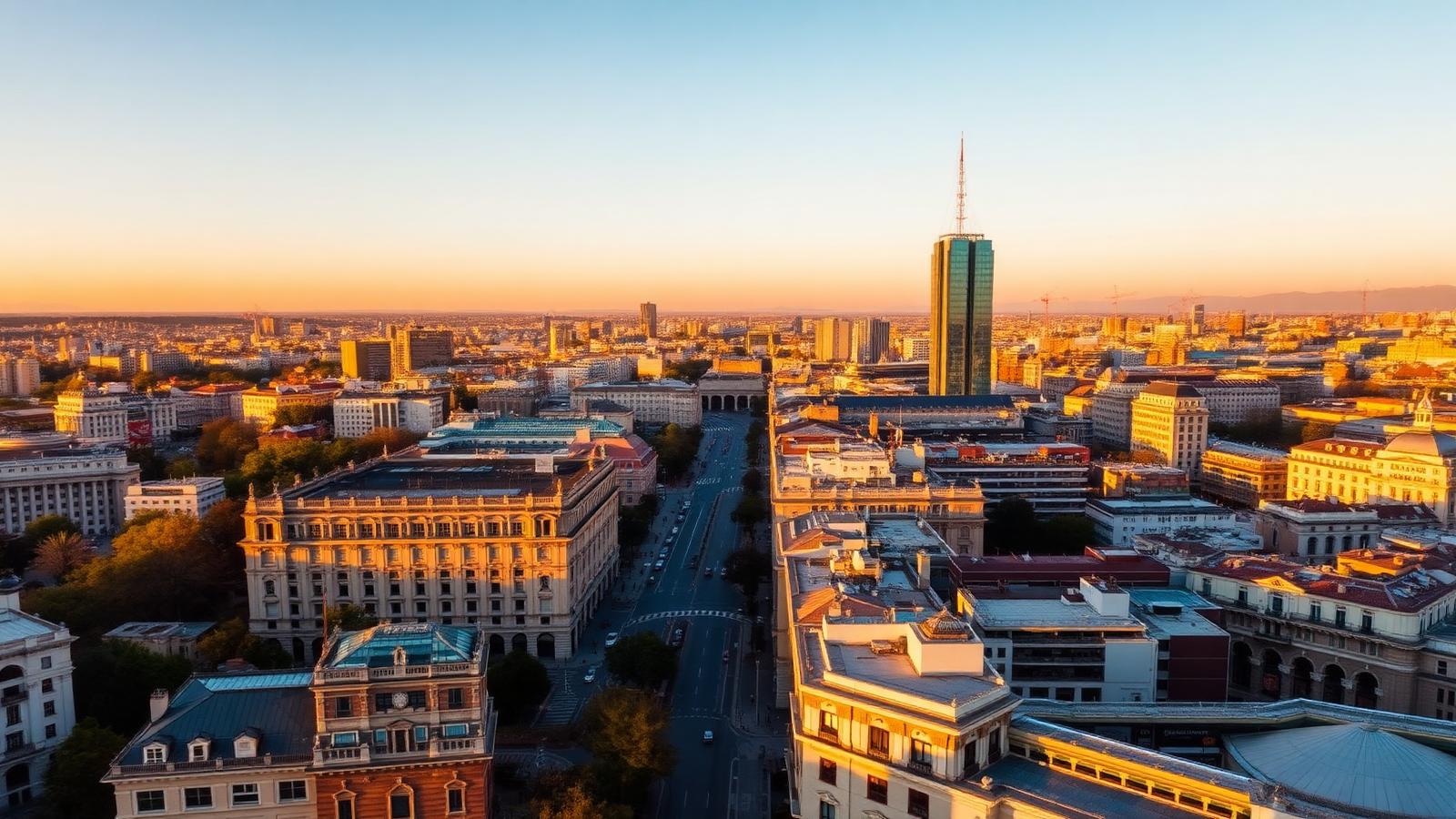
Offizielle Daten von INE, Banco de España, Registradores, Tinsa, Idealista, CBRE und PwC/ULI: Madrid +70 % in zehn Jahren und Europas Investment-Ranking.
Madrid verzeichnet ein Jahrzehnt an Preissteigerungen, die seine Position als erste europäische Stadt für Immobilieninvestitionen laut PwC und ULI (2024-2025) [1] stärken. Die strukturelle Nachfrage wächst schneller als die Preise.
Preisentwicklung: wie stark Madrid in 10 Jahren gestiegen ist
Der IPV des INE zeigt +78 % kumuliert 2015-2024 in der Region Madrid gegenüber +55 % national [2]. Tinsa: 4.250 €/m² Ende 2024 gegenüber ≈ 2.450 €/m² 2014 (+73 %) [3]. Idealista: 5.100 €/m² 2025 [4].
| Jahr | Madrid Stadt (€/m², Tinsa) | Veränderung zum Vorjahr |
|---|---|---|
| 2014 | ≈ 2.450 | — |
| 2017 | ≈ 2.950 | +8,7% |
| 2019 | ≈ 3.350 | +5,2% |
| 2021 | ≈ 3.480 | +2,1% |
| 2023 | ≈ 3.900 | +6,8% |
| 2024 | ≈ 4.250 | +9,0% |
Quellen: Tinsa IMIE und Registradores [3][5].
Preiskarte nach Bezirk: Gewinner und Nachzügler
Die Rallye war nicht gleichmäßig. Idealista und das Wirtschaftsobservatorium zeigen: Prime-Bezirke haben sich fast verdoppelt, der Süden startet seinen eigenen Zyklus [4][6].
| Bezirk | €/m² 2015 | €/m² 2025 | Veränderung |
|---|---|---|---|
| Salamanca | ≈ 4.700 | ≈ 7.600 | +62% |
| Chamberí | ≈ 4.200 | ≈ 6.900 | +64% |
| Centro | ≈ 3.900 | ≈ 6.400 | +64% |
| Chamartín | ≈ 4.000 | ≈ 6.300 | +58% |
| Retiro | ≈ 3.800 | ≈ 6.100 | +61% |
| Tetuán | ≈ 2.600 | ≈ 4.700 | +81% |
| Arganzuela | ≈ 3.000 | ≈ 5.000 | +67% |
| Carabanchel | ≈ 1.500 | ≈ 2.900 | +93% |
| Usera | ≈ 1.500 | ≈ 2.800 | +87% |
| Puente de Vallecas | ≈ 1.400 | ≈ 2.700 | +93% |
| Villaverde | ≈ 1.250 | ≈ 2.300 | +84% |
Quellen: Idealista und Wirtschaftsobservatorium Madrid [4][6].
Drei zentrale Erkenntnisse:
- Prime steigt absolut weiter, beschleunigt aber nicht mehr am stärksten. Salamanca und Chamberí setzen Rekorde, periphere Bezirke wachsen schneller.
- Der jüngste Zyklus liegt im Süden und Südosten: Carabanchel, Puente de Vallecas, Villaverde und Usera führen die prozentualen Gewinne an (build-to-rent, Gentrifizierung, Verkehr).
- Tetuán und Arganzuela sind die Gewinner im Zentrum-Norden.
Warum Madrid trotz Rally attraktiv bleibt
1. Europäische Spitze bei Immobilieninvestitionen
PwC + ULI 2025: Madrid Nr. 1 in Europa [1]. CBRE: 14 Mrd. € Investitionen in Spanien 2024, ~50 % in Madrid [7].
2. Strukturell unzureichendes Angebot
Die Banco de España warnt: weniger als die Hälfte des benötigten Wohnungsbaus [8] — Preisboden mittelfristig.
3. Arbeitsmarkt und Talentmagnet
20 % des nationalen BIP, IBEX-35-Sitze, Banken und Kanzleien [9]. Niedrige Arbeitslosigkeit.
4. Günstige Regionalsteuern
100 % Vermögensteuer-Bonifikation, 6 % ITP, Erbschaftsvorteile [10][11].
5. Internationales Kapital und ehemalige Golden Visa
~15 % der Transaktionen durch Ausländer [5]. Golden Visa ab April 2025 abgeschafft [12], lateinamerikanischer Fluss hält an.
6. Corporate- und Büro-Hub
Spaniens größter Büromarkt: Cuatro Torres, AZCA, Méndez Álvaro.
7. Infrastruktur und Konnektivität
66,2 Mio. Passagiere in Barajas 2024 [13]. Metro, Cercanías und AVE.
8. Build-to-rent
~60 % der spanischen Build-to-rent-Pipeline in Madrid [14].
Bruttomietrendite in Madrid
Bruttorendite ~5,0 % 2025 laut Idealista [4]:
- Puente de Vallecas, Villaverde, Usera, Carabanchel: 6,5 % – 7,5 % brutto.
- Tetuán, Arganzuela, Latina: 5,0 % – 6,0 %.
- Centro, Chamberí, Retiro: 4,0 % – 5,0 %.
- Salamanca, Chamartín: 3,5 % – 4,5 %.
Risiken im Blick
- Mietregulierung — angespannte Zonen möglich [15].
- Ferienvermietung in Centro verschärft.
- Zinsen über dem historischen Durchschnitt.
- Solidaritätssteuer auf große Vermögen (≥3 M€).
Steuerpflichten für nicht ansässige Käufer
Wenn Sie in Madrid kaufen, ohne in Spanien steuerlich ansässig zu sein, haben Sie wiederkehrende Pflichten über das Modelo 210:
- Kalkulatorische Miete (1,1 % oder 2 % des Katasterwerts), wenn nicht vermietet.
- Mieteinnahmensteuer: 19 % mit Abzügen für EU/EWR-Ansässige, 24 % ohne Abzüge für andere.
- Kapitalertrag beim Verkauf, mit der Rückerstattung der 3-%-Einbehaltung.
- Vollständiger Leitfaden: Was ist Modelo 210? · Madrid-Hub · Madrid Stadt · Pozuelo · Las Rozas.
Fazit
Zehn Jahre Preissteigerungen haben Madrids Attraktivität gefestigt — mit der wiederkehrenden Modelo 210-Pflicht.
Quellen
- 1[1] PwC & ULI — Emerging Trends Europe 2025
- 2[2] INE — IPV Region Madrid
- 3[3] Tinsa — IMIE Madrid
- 4[4] Idealista — Bezirkspreise Madrid
- 5[5] Registradores — Madrid Statistik
- 6[6] Stadt Madrid — Wirtschaftsbeobachtung
- 7[7] CBRE Spanien — Outlook 2024-2025
- 8[8] Banco de España — Jahresbericht 2023 Wohnungsmarkt
- 9[9] INE — Regionale Konten Madrid BIP
- 10[10] Region Madrid — Vermögensteuer-Bonifikation
- 11[11] BOE — Gesetz 38/2022 Solidaritätssteuer
- 12[12] Regierung — Ende Golden Visa April 2025
- 13[13] AENA — Barajas 2024
- 14[14] JLL / Savills — Build-to-Rent
- 15[15] BOE — Gesetz 12/2023 angespannte Zonen
Comments(0)
Sign in to leave a comment
Be the first to comment.